Student activism, free software and meeting inspiring people

My recent articles on or in New Internationalist

I’ve had a couple of interviews published in the magazine recently, including a Q&A with Man Booker Prize nominee Jeet Thayil, for November (online here), and an interview with the amazing feminist activist Khanum Lateef from the the Kurdistan region of Iraq, published in December’s issue.

On 21 November I went to London for the NUS demo and wrote a couple of blog posts – before and after.

For December’s podcast I spoke to NI’s Hazel Healy and Charlie Harvey. We had an interesting discussion about digital freedoms and non-freedoms, privacy, the practicals of free software and why tech is so dominated by men.

For anyone interested in the free software movement check out this month’s massive web hit, Hazel Healy’s interview with Richard Stallman.

The power of we: Young activists, revolutionary healthcare and the Saleh Family

October was a busy month at newint.org – here’s some of the content I’ve written or produced…

‘The power of we – My post for Blog Action Day 2012: why I think collective action and internationalism are as important as ever.

Natasha Makengo from Save the Congo and Shukri Sultan from Hands Off Somalia – As part of our blog series celebrating young activists I interviewed Natasha and Shukri about how they got involved in campaigning and what inspires them to keep going.

November’s podcast features Professor John Kirk on Cuba’s revolutionary healthcare system. I asked him about Cuba’s foreign medical missions, how they run universal free healthcare at home and spoke to him about some of the criticisms.

And lastly, I wrote a post about my friend Shrouk’s family who had fled Egypt five years ago because of their abusive father with prominent state connections. They had been taken from their home in the early hours of the morning and were eventually sent back to Eqypt despite a massive campaign to keep them in Wales. The campaign to Save the Saleh Family continues – find out more at the Facebook page.

Youth activism, cross-border feminism and climate justice

My latest offerings from the New Internationalist website…

Podcast: Jody McIntyre on youth activism – As part of the lead up to October’s youth issue I made a podcast featuring an interview with guest-editor Jody McIntyre.

‘We were wrong to think the environment could wait’ – Interview with Lidy Nacpil, the inspiring Filipino economic and climate justice campaigner who started out as a student activist against the Marcos regime.

The dos and don’ts of cross border feminism – Last weekend I went to UK Feminista’s Summer School for a day and caught this session on building global solidarity.

Right, I’m off for a little holiday to Gent, Belgium now. Looking forward to catching up on some reading on the bus journey – am finally going to get through Paul Mason’s Why It’s Kicking Off Everywhere – better late than never!

New Internationalist podcast

Finally posting about the podcasts I’ve started making at New Internationalist.

The first one, for the September issue of New Internationalist, is on the legalization of drugs. In it I speak to Vanessa Baird, NI co-editor about why she thinks the war on drugs isn’t working.

You can listen to the podcast here. Read more about September’s New Internationalist here.

Today I spoke to Jody McIntyre for October’s episode on youth activism. Here’s a video taster for October’s issue – Youth rising: why apathy is not an option.

Squatting myths

This weekend a law criminalising squatting in residential buildings in England and Wales came into force, leaving up to 20,000 people facing eviction, fines or imprisonment.

Similarly to protesters, squatters are a often stereotyped and misrepresented in some of of mainstream press as freeloaders, anti-social, a nuisance to the community. Unlike any squatter I have ever met.

Sure, just because I haven’t met squatters fitting that description it doesn’t mean they don’t exist. Squatters are like any group of people, not a homogenised mass. They make use of empty buildings, making them home and sometimes a community space as well.

Squatters utilise all sorts of buildings but these laws only apply to residential ones. It is estimated there are 350,000 long term empty homes in the UK, 279,000 in England. These are the buildings people would have been able to squat.

As the squatting law has been discussed in the press over the last few days the same old inaccurate moans have come out, as well as some great reporting. Here are some of the squatting myths that get to me the most:

Squatters don’t pay their way

Sure, squatters are not paying rent or a mortgage but they are subject to the same tax laws as everyone else, including council tax. While some may not pay, that makes them no different to non-squatters.

Often buildings are empty because they are not of good enough standard to rent. If people decide to squat them this often means connecting up energy supplies and fixing things round the house, things which often cost money and a lot of time.

This law was needed so landlords could get rid of squatters

Buildings must be empty for people to squat them. They must not break in or cause criminal damage. They can not squat people’s homes. There were already laws in place to deal with all of those things.

Even if they’ve entered through an open window and caused no damage to a building that has been empty for years they can still be evicted. What was known as ‘squatters rights’ didn’t mean squatters could just take any building they want.

Squatters are lazy

It’s the age old criticism thrown at anyone vaguely ‘alternative.’ While the rest of us are working hard, paying our way how come these people have the time, and cheek to protest/occupy/squat/actively try and change or do anything positive?

Many squatters have jobs, many don’t (seemingly the yardstick of ‘laziness’ used by people in these arguments). Living in a squat is itself almost a full time job and most keep residents there 24/7.

A lazy squat just wouldn’t work.

For more information on the law and squatting in general go to the Advisory Service for Squatters.
The law is being challenged in court by Irene Gardiner in Wales, find out more here.

Somewhere to_ show off in Cardiff

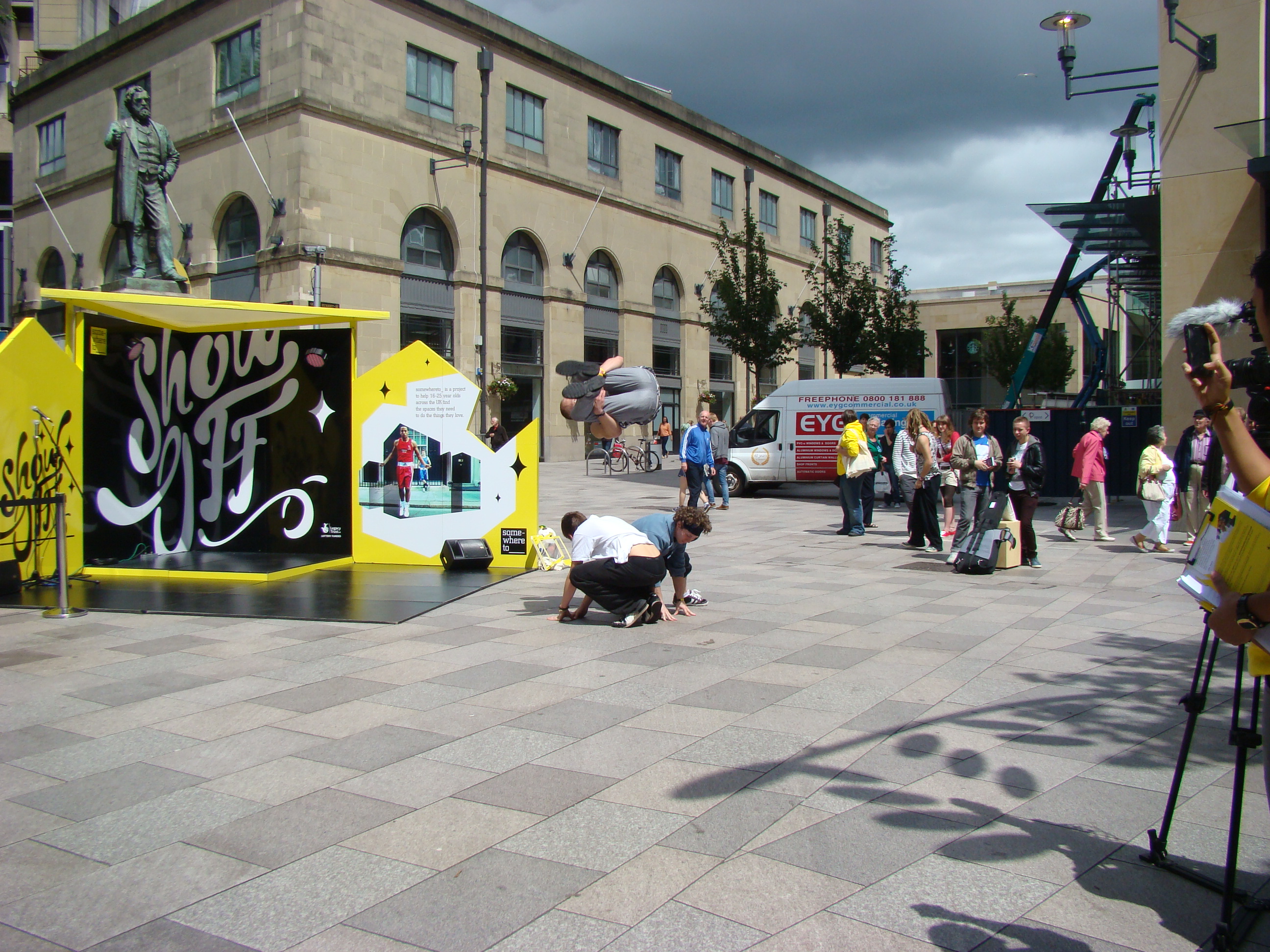
Checking out Cardiff’s young talent with somewhere_to in The Hayes, Cardiff city centre, on Tuesday…

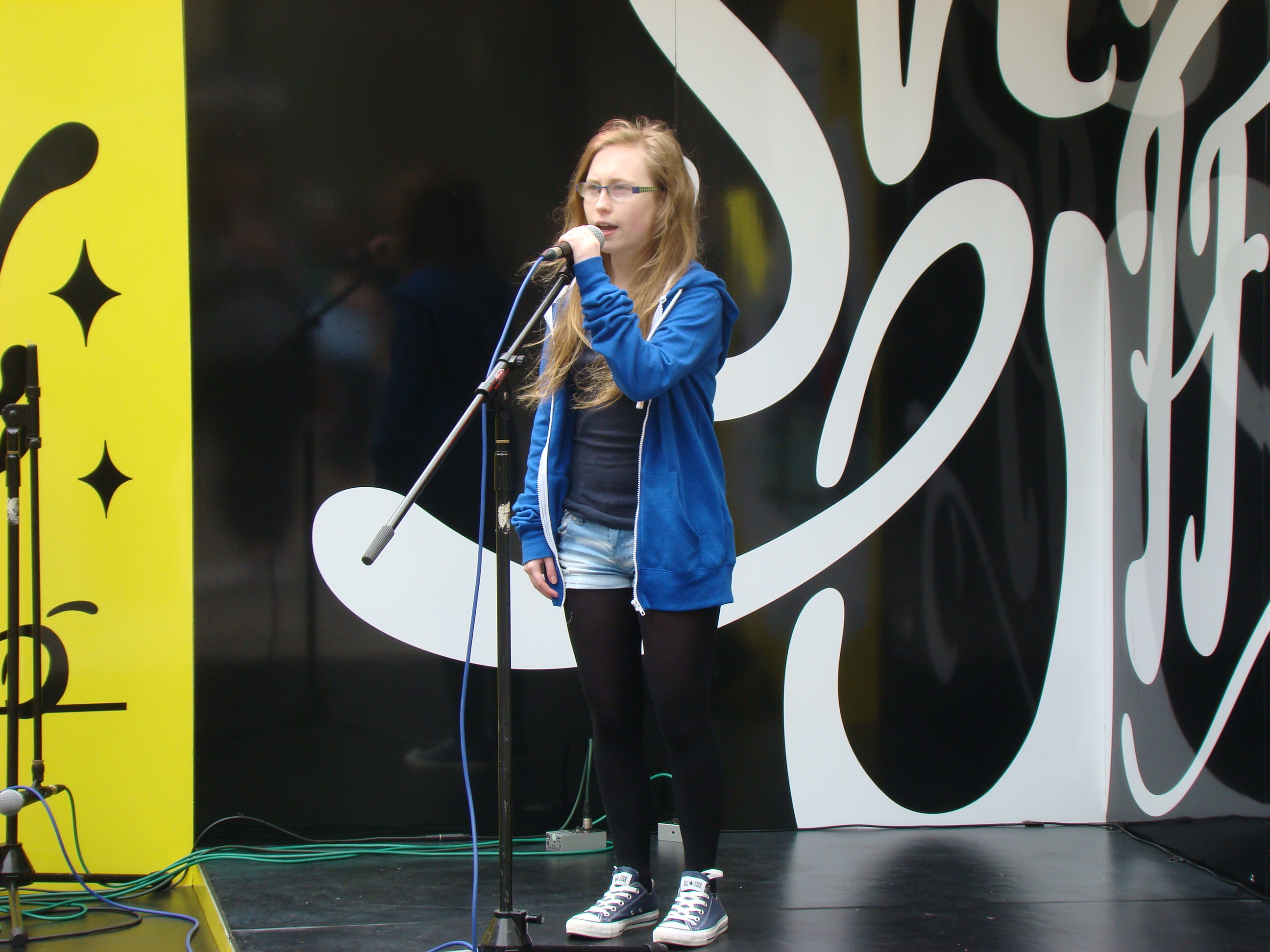
Shannon gets recruited to sing

Empty buildings frustrate me, and it’s getting more common. While thousands of people are in need of housing, or community space, loads of it is being wasted, or hoarded. Squatted community centres like the Red and Black Umbrella, here in Cardiff, are one way people tackle this from the grassroots. There are also emerging projects like Capacity Bristolwhich aims to “legitimatise the temporary usage of space by artists.”

Fluidity Freerun

Fluidity Freerun

Livity, the “socially responsible communications” people, are doing things their way with somewhereto_, along with Channel 4 and the Legacy Trust. The aim is to match 16 to 25 year olds up with space they’ve been looking for to do anything from singing to running a community group or practising gymnastics.

Cardiff’s somewhereto_show off leg started off very quiet; no background music and no performers, but things eventually kicked off with Lloyd Daniels (he’s off X Factor) who did two covers. After that things were pretty much back-to-back with some performers who had been pre lined-up to play and some who had volunteered off the street, with a crowd gathering for each one.

Ffion impressed with her voice

Performances were singer heavy, not quite the crazy array of Britain’s Got Talent style acts I was hoping for, but people like funky duo Twelve Strings and Ffion Edwards, who had to convince the Livity people that she was actually 16, and not younger, blew everyone away. Sam Hickman, the Joanna Newsom-esque harp player and singer covered Paloma Faith – she’s one of my favourite Cardiff buskers, locals can check her out singing near the Owain Glyndwr. For the boys, Shannon and Russell Jonesbrought out the retro rat pack voices, despite their fresh faces.

Nathan Mizra

Fluidity Freerun satisfied my craving for acrobatics with their impressive parkour, Saeed brought out his motorbike noise impressions and Nathan Mizra did a touching but short spoken word performance. Other performances included the terribly named Ladies Love a Superherowho were a bit like a McFly for 2012 and gave Llyod Daniels a good run for his money singing wise. Didn’t get asked to have as many photos with teenage girls thought and sign as many flyers, all in good time though.

Hopefully this competition will go some way to raising awareness about somewhereto_ and underused space in general, and be more than just another talent show.

Cardiff was the last date of the tour but you can still submit video entries online until 16 July 2012.

Celebrating Cardiff’s women

Last Saturday at a craftivism workshop in Cardiff I met Sara Huws and something she mentioned got me thinking: Where are all the statues of women in Cardiff?

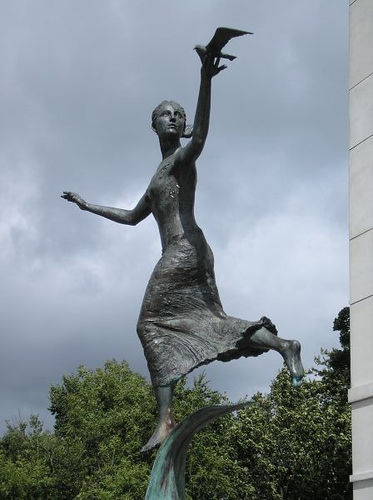
If you know Cardiff your thoughts will automatically snap to statues like Mother and Son on Queen Street, or maybe Nereid on Kingsway. Statues like these were pointed out by fellow workshop attendees but none of us could name them as people; they are all nameless women representing an aspect of womanhood or some kind of character or concept.
Nereid

Nereid by Nathan David

Sara wrote a blog post on this in 2011:

“I’d rather be proven wrong about this, but it really does look like every female body represented in public sculpture around Cardiff is symbolic (every! single! one!). They fall into the following general categories: angel, goddess, virtue, caryatid, figurehead, mother and wife. Possibly mermaid.”

In her post titled A Modest Proposal: A Statue of an Actual Woman for Cardiff, she explains her quest for, “a public sculpture in Cardiff of an actual female person, living or dead, whose name I could Google.” She wrote:

“In a frankly super-retro twist on an ole’ Victorian classic; women’s bodies and what they represent are abundant in Cardiff, but not their stories, identities and voices. The ‘seen and not heard’ female slips unnoticed into the civic background of the city.”

I was pretty surprised that the capital city of Wales, a place full of strong women and a city that often celebrates its diverse past and present would have been able to find many women to dedicate statues to.

It could be argued that nobody deserves a statue, that behind every great politician, scientist artist of sportsperson there is a number of great people contributing just as much, if not more, to their community and the world. But it’s a shame that the public face of Cardiff while finding it within itself to dedicate statues to men like Aeurin Bevan, Jim Driscoll and Ivor Novello, all just as deserving as Cardiff and Wales’s well known women who have not been given the same kind of celebration. After all, if they are not celebrated and given the same public respect as men what hope is there for the rest of us?

The original post was a while ago now, July 2011, but Sara is still interested in Cardiff’s missing woman statues. She has said she’ll be researching women’s stories and posting about them as she goes as well as conducting a poll.

So here’s my suggestions (and yes, I think nominations can be dead or alive, and I admit I don’t have a great knowledge of history):
Shirley Bassey – Sara’s prediction of the poll winner
Tanni Grey-Thompson – Possibly one of Wales’ most well known sportswomen
Gillian Clarke – poet, playwright and many other things, also figures in many G.C.S.E and A Level English anthologies and course work

Who would you like to see a Cardiff statue for?

Read Sara’s full post on her blog Boglyn, here.

Thanks to David Reeves for the photo.

In the Observer today

An article I worked on with Denis Campbell while on placement at the Guardian earlier this month was in the Observer today, which is exciting; my first joint byline in the paper. It’s about the contraceptive coil (IUDs) and problems with fitting, you can read the article here.

April: the month of interning

For the last five weeks I’ve been doing work experience at the Ecologist and the SocietyGuardian

Since the beginning of April I’ve been sofa surfing my way around London (and Surrey), staying with lovely friends and family, and getting a lot of use out of my A to Z.

The first four weeks were at the Ecologist, an environmental online magazine. It was great to be somewhere with such a history in the environmental movement and properly get stuck in to some interesting topics that I really care about. Interns at the Ecologist tend to be tasked with writing a lot of lifestyle articles for the Green Living section, something I haven’t done a huge amount of before but I really enjoyed getting into something different while still writing about things I cared about. I also had some really helpful expert interviewees (and editors) to help me out. I will be posting links to all the articles I wrote here as they are published on the site.

For my final week I was back at the SocietyGuardian (I was there for two days in September) it was again great to get stuck into researching some really important issues. One of my main tasks was working on these interviews for a piece two years on from the launch of the ‘big society’, tracking down some of the people who went to the high profile meeting at Downing Street to find out what they thought now with some interesting responses.

I was really lucky with both my placements, working with welcoming and friendly teams in both places, and at the Ecologist my fellow interns Rachael, Mark and Lisa.

Now it’s back to one month more of uni, deadlines, exams and then in June out into the ‘real world’ again.