Content from UpStart

Here’s some of the content I have done for UpStart magazine.

For Issue 1 I was on the ‘craft’ team, which did most of the design and subbing. Here are the pages I designed:

Issue 1 Contents

Joanne Dewberry interviewNews

For Issue 2 I was on the create team, writing copy and sourcing images. Here are a couple of the articles I wrote:

Green business

Both these pages were designed by Jo Price

For a better quality look at the whole magazine you can read it in full here on issuu.

UpStart Issue 2

The second Issue of UpStart is done and dusted.

We’ve now finished the second issue of UpStart magazine and are well on the way to Issue 3 which will be finished next week.

For Issue 2 we have tried to get more of a definite persona for the magazine, concentrating more on practical tips, inspiring an useful stories and improving the design.

For Issue 2 I was on the team behind writing the actual content, whereas for Issue 1 I was on the design section.

Read Issue 2 here on issuu.

UpStart

At the moment I’m part of a team of 14 people working on a new magazine called UpStart which is part of our Postgraduate Diploma course.

UpStart is aimed at the UK startup community, hoping to provide something more useful, interesting and relevant to people who have small businesses than traditional business media which tends to cater for bigger, less creative, higher turnover businesses. We want to speak to the people working for themselves, either on their own or in a small team, avoiding the ‘men in suits’ image of the business media. People who don’t so much see themselves as businesswomen and businessmen but people who have their own businesses.

Currently we are working on issue two of the magazine but you can see issue one here on Issuu, any feedback gratefully received.

The UpStart website is here.

My first editing job

After nicking my granparents’ and parents’newspapers and magazines while growing up, and sneakily listening to the radio under the covers at night, I was pretty excited to get my first editing role in primary school.

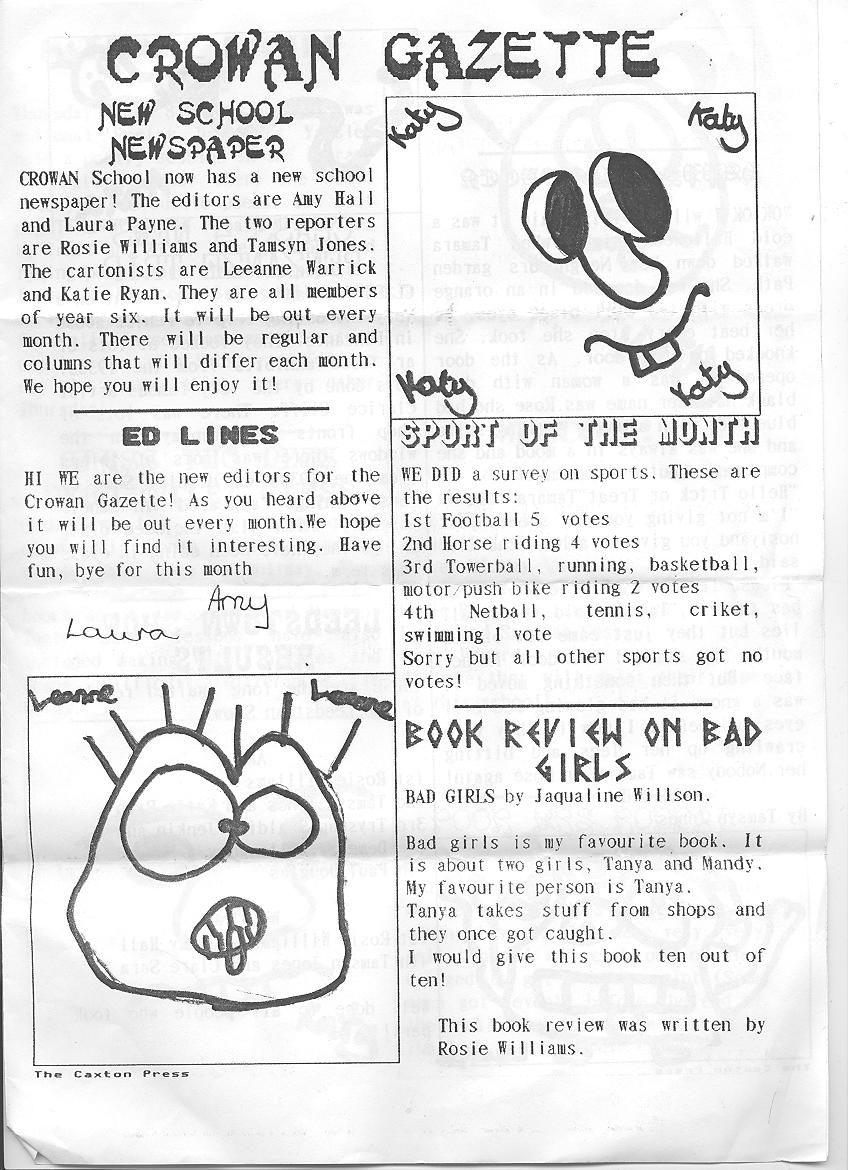
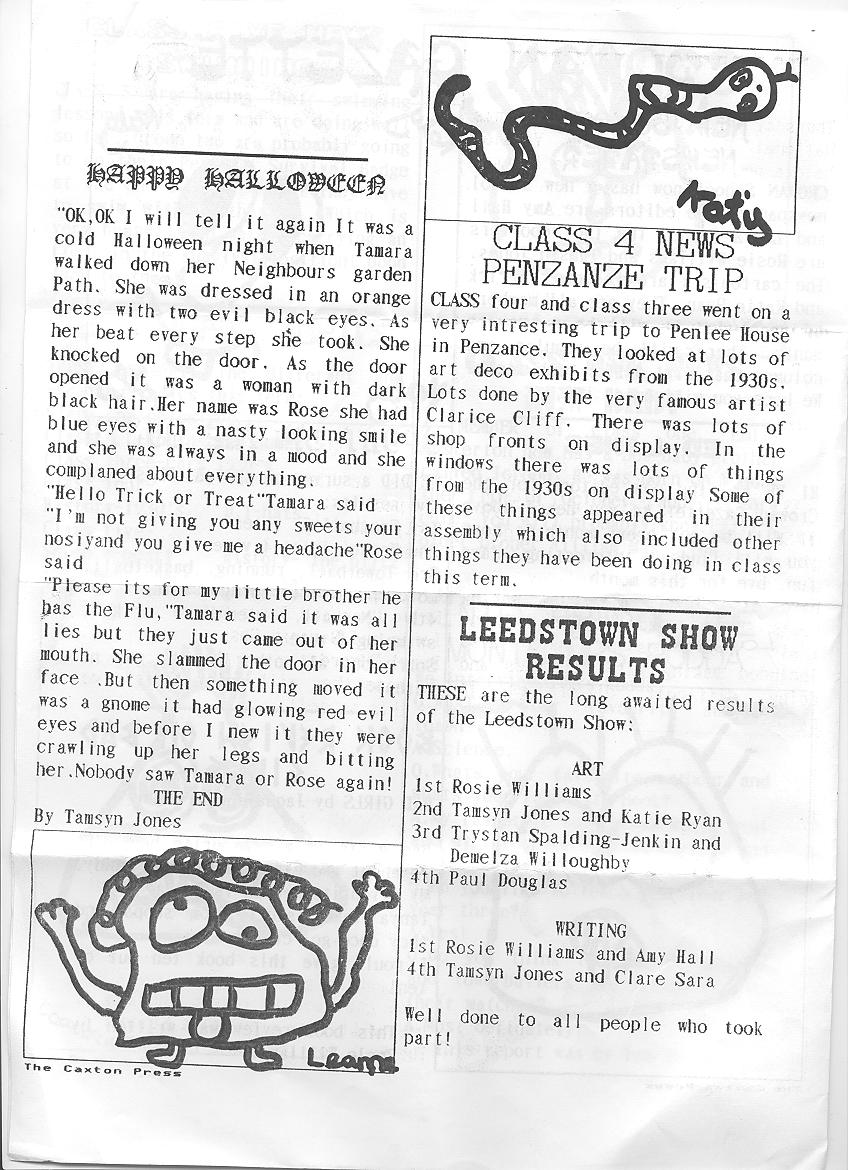
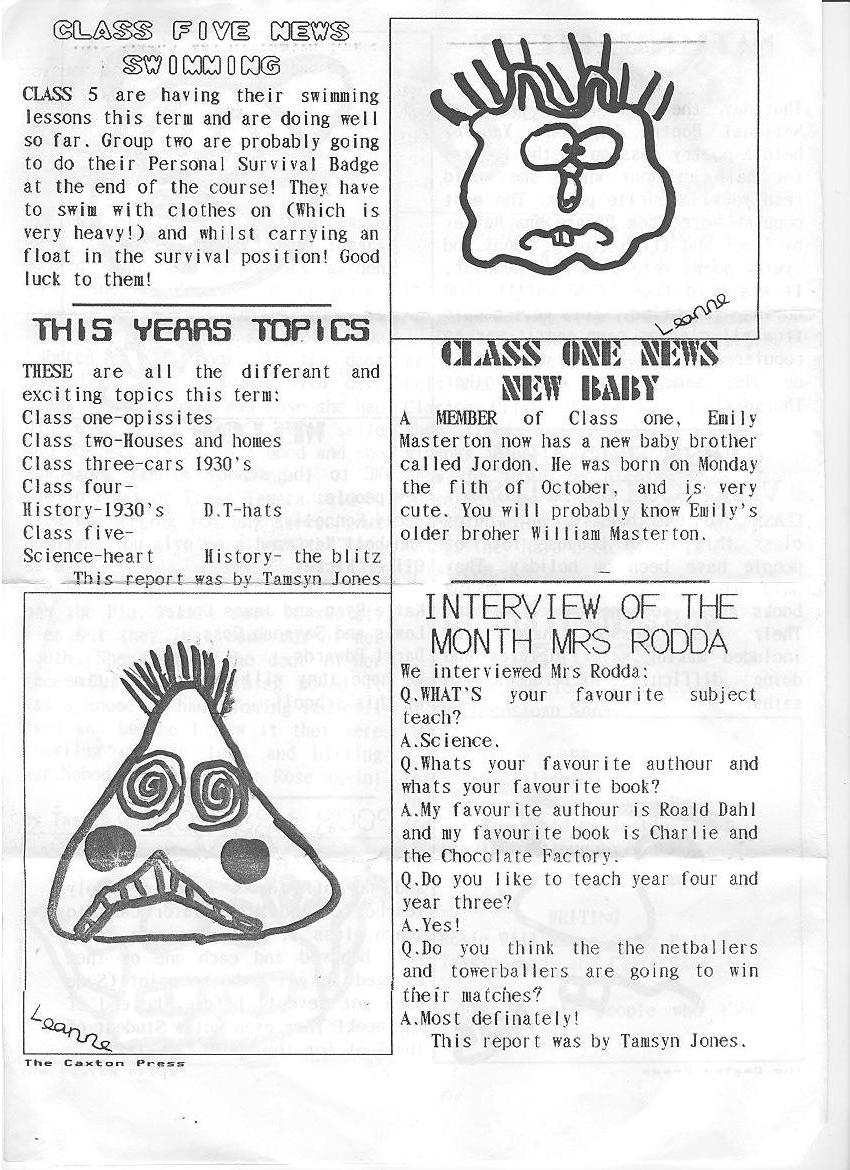
Recently I found this old Crowan Gazette at my parents’ house, which I helped to make while at Crowan School. It seems I was a co-editor. Also on the team was Tamsyn Jones, now one of my best friends. We must have been 10 or 11 at the time.

It says it was going to come out monthly but I don’t think we ever made another one! I can’t remember why. I love all the stuff like Leedstown Show Results, and Class 4’s trip to Penzance. Makes me a bit homesick for Cornwall.

New Blog: Take Root

I’ve started a new blog called Take Root all about grassroots campaigns and community projects in Cardiff. Hopefully it will grow to be a good place to find out about what’s going on in Cardiff and how to get involved as well as a place for discussion and interaction.

It’s early days still so any feedback welcome and if anyone wants to contribute in any way just let me know.


Can there be radical voices in the mainstream media?

Journalists considered to have radical views are sometimes judged as being unable to differentiate between fact and opinion, while on the other side accused of succumbing to an inaccurate ‘establishment approved’ version of the truth. I went to a session at last weekend’s Rebellious Media Conference and heard from three ‘radicals’ working in the mainstream media…

Annoying authority is doing a journalist’s job – advice journalist Amira Hass was once given and has stuck with her as a Jewish Israeli working for Israel’s oldest daily paper Haaretz and spending time living in and reporting on the Occupied Palestinian Territories.

Hass was on a panel titled ‘Inside the Belly of the Beast: Radicals in the Mainstream Media’ joined by Duncan Campbell the man behind the controversial BBC series Secret Society and who exposed the ECHELON surveillance project. The third panel member was David Crouch, deputy Europe news editor of the Financial Times. All three have been, or continued to be, annoyances of authority but also have made successful careers of working in the mainstream media.

The idea for this session came from George Monbiot’s career’s advice article Choose Life.  He writes: “the truth is that by following the path they suggest [careers people advising against specialism], you are becoming a specialist: a specialist in the moronic recycling of what the rich and powerful deem to be news. And after a few years of that, you are good for very little else.”

But for many people who want to earn a living out of journalism will follow the path Monbiot calls counter-educational, at least for a period and their day job may mean their work will be read or heard by a bigger range of people, who their ideas may not normally reach.

David Crouch maintained that it was possible to make a difference from the inside, using the anecdote of a friend who had worked as the night editor of a tabloid spending his whole shift taking the racism out of the paper so the bile wasn’t spread. He said the left have an ‘extermination’ approach to the mainstream media which needs rethinking. The hierarchy in the newsroom means the press is produced by ‘ordinary people’ so he feels there is a lot of potential in the unions, in particular the NUJ for which he is a representative. He said the union fosters pride in producing the facts and getting them right.

When asked whether the panel considered themselves activists as well as journalists Campbell pointed out the truth should never be sacrificed because of a partisan opinion but that, yes, journalists can have viewpoints too as long as they stick to the ground rules of good journalism. Hass agreed there was a line to be drawn; she will attend mass protests as a citizen but go to Gaza as a journalist. But she also said that truly objective journalism was a myth citing the examples of military embedded reporters. Everyone has opinions which come out in their work, whether they are explicitly voiced or not.

Amira Hass feels her role is to get stories covered that might not otherwise. Her main method of fact finding comes from ‘ordinary people’ although she feels this has less prestige in the eyes of editors who value secure documents and information. She also said that news sections where she has the most trouble getting her work published as they are kept more conventional but that investigative journalism was still possible in feature writing.

As well as media makers there were many activists in the audience keen to find out how they could get their campaigns more column inches. Duncan Campbell said campaigners needed to look more to the long term. While they may get coverage here and there real change is brought about by sustained campaigning and willingness to work with a variety of people. On the subject of ‘scandalism’ – a willingness to only cover issues with big fireworks and not drawn out problems – Campbell reiterated this point saying campaigners couldn’t rely on the media to do their activism for them. Media strategies can’t be the be all and end all. Hass was mostly in agreement; she pointed out that the exceptional is the usual for a Palestinian and admitted that there would need to be something ‘juicy’ in the story for it to attract attention as much as she didn’t like it.

Although the three people on the panel had had negative experiences working within the mainstream media, none of them seemed to feel disillusioned or like it wasn’t worth it. After all, today’s ‘radical’ views are often tomorrow’s common sense.  As Amira Hass pointed out – you don’t feel the breakthroughs all at one time.

Ctrl.Alt.Shift: Episode 2

My final big project with Ctrl.Alt.Shift is Ctrl.Alt.Shift: Edpisode 2. In a follow up to our podcast on gender equality for International Women’s Day in March this one is all about Climate Change & the Environment. We explore the topic through debate, music, spoken word and comments from some of the people across the world who are already being effected by Climate Change.

Check out the article on the Ctrl.Alt.Shift site here or go straight to listen to the podcast at SOAS Radio here.

Thanks to the team for working so hard to get it done and, of course, to the excellent SOAS Radio for hosting it.

Any feedback welcome!

Live Below The Line: Day 5

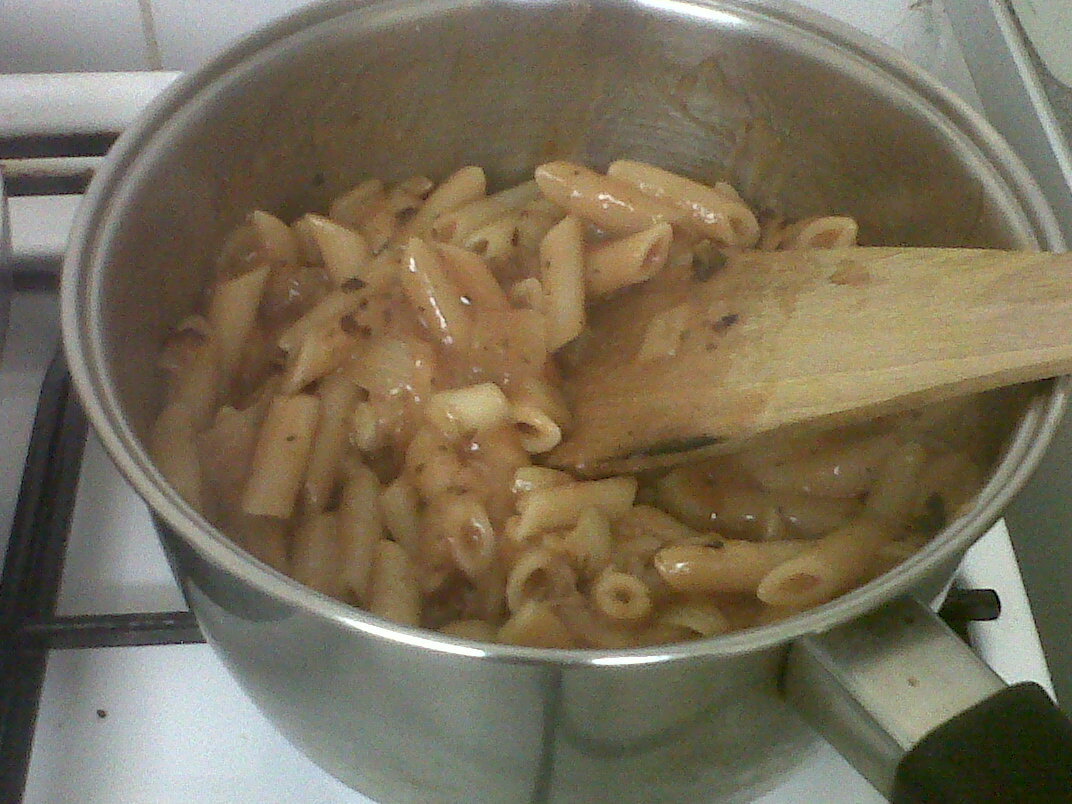
The final day of Live Below The Line is here. I must admit I’ve gone a bit crazy today, eating more than I have the rest of the week as I know what’s left so please don’t judge me when you read what I’ve eaten! I even managed the three course dinner this evening, half a tin of vegetable soup with pitta and then surprisingly good pasta with sauce and onion then chocolate biscuits.

Soup

One thing I am sick of the sight of is Basics ready salted crisps. I don’t really eat crisps normally and at first it was quite a treat but although they have been a useful snack, I should have bought something healthier and nicer – maybe some tinned fruit or something. I still had four packs left, so far have managed to give away two. Another thing I won’t miss is the lack of fruit, veg and pulses. It has made me think about how much I overeat though and also that I really need to cycle more.

Of course these are all things I can choose and again it reminds me about one of the aims of the challenge – to raise awareness about extreme poverty. I have had a glimpse that energy levels will suffer as a result of a diet without much fruit, veg and protein but I can choose to eat more healthily from tomorrow. If I actually lived in extreme poverty I wouldn’t be able to.

Also I only had a £1 a day budget for certain areas of my life whereas many people have that for everything. They also wouldn’t have the option of blowing any money left from that £1 a day at the end of the week as they would need to save it for the next.

Another thing that has been bothering me is how cheap the food can be in the supermarket. Is it really possible to make, package and sell for that? I know there is less packaging in value ranges and less of a mark up but I feel that people here and abroad, like farmers, small shopkeepers and people helping to manufacture what we buy must be loosing out.

Course 2

There is no ‘value’ option in many places. One of the only reasons we have the option of such cheap food is because massive corporations exploit the labour of vulnerable people across the globe as well as here in the UK. In a system where profit is king and economics is increasingly international and interdependent, multinationals, which can produce cheap and luxury goods for the wealthy have the biggest power.

I am glad my fundraising target has been hit and thank you so much to everyone who has sponsored me so far, it’s really generous and your money will be going to help some amazing projects all over the world run by local people and benefiting their communities. If you want to find out more about the kind of projects Christian Aid funds there’s a great Poverty Over section on the Guardian website here, including some inspiring short films.

I’m off to Brighton tomorrow with a couple of friends and would like nothing more than to spend the whole day eating vegetables, which would please my mother. I also fancy a massive drink, which might not.

Spending:

Total Spent: 0p

Total money left at the end of the week: 7p

Food Eaten:

Breakfast – two remaining crumpets

Mid morning snack – chocolate biscuit

Lunch – one pitta with coleslaw, instant noodles, chocolate biscuit

Mid afternoon snack – chocolate biscuit

Waiting for dinner snack – toasted pitta

Dinner –  half tin of soup and pitta, pasta with sauce and onion, chocolate biscuit

If you have any spare cash you can sponsor me here 

Or if anyone fancies taking on the Live Below The Line challenge you can do it anytime, just check out the website here.

Live Below The Line: Day 4

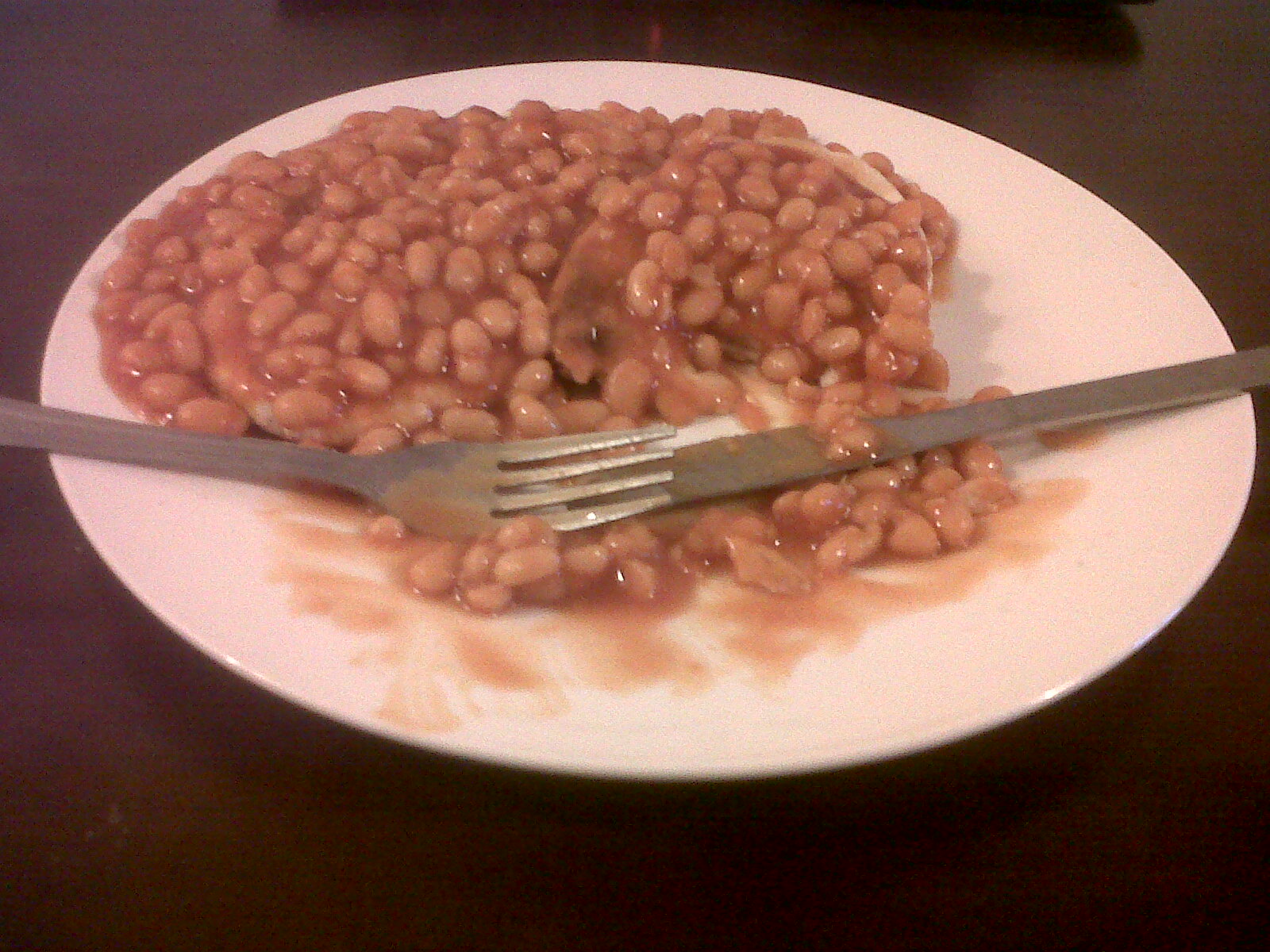
With one day left to go I decided to blow the rest of my budget when I got back to London. As a vegetarian, I eat a lot of pulses but I realised last night that I haven’t been eating them this week and am really missing them. Pulses are such a good source of energy so I invested in a good ol’ tin of baked beans.

Mmmmmmmmmm

I’d worked out how much food I had left for the next two days and as well as being able to splash out on beans I discovered that cheapo pasta sauce actually costs less than tinned tomatoes in my local supermarket, and it serves four, and it has herbs in it. Apparently it tastes horrible but it has herbs, how can it be worse than plain tinned tomatoes? This, along with two onions, and the rest of the uncooked pasta, means I can cook up a three course meal for my friend who is staying tomorrow night. I had told her she would have to bring her own dinner but now we have a right feast to look forward to.

In other good news, maybe too much information, but the saddle sore I experienced yesterday morning has nearly disappeared after a day and a half off the bike. It was safe and sound when I arrived back at work this evening but I did loose my bike lock keys twice today and had visions of either trying to break the lock and being accused of stealing my own bike, having to break the rules again and getting the bus home, or walking four miles back, not the option I would have chosen but it would have been my own choice if I actually lived in extreme poverty. If I actually lived in extreme poverty I would be lucky to have a bike in the first place, even if it is nearly as old as I am.

Spending

Pasta sauce – 18p

Baked Beans – 28p

Two Onions – 21p

Total Spent: 67p

Food Eaten

Breakfast – crumpet and apple

Lunch – The rest of the leftover pasta and more coleslaw

Mid afternoon snack – crisps

Dinner – Beans on toasted pitta bread and two chocolate biscuits

I’ve found out that the musical experience that is Marc Nicholas have a song dedicated to the Sainsbury’s Basics range – it is my theme for the week and you can find it here.

If you have some spare cash and want to sponsor me, you can visit my fundraising page here.

Live Below The Line: Day 3

OK, so its time to come clean: I’d actually broken my own rules before I’d even started. Last week, when I’d already set up my fundraising page, I found out I had an interview tomorrow…in Cardiff. I could have said no to it I guess but I didn’t so I decided to relax my rules and buy a return bus ticket to Cardiff costing £12.50 which I am sat on as I start to write this. It’s just another reminder that, lucky for me, this isn’t my life.

I cycled to work as normal leaving my bike there to walk to the bus. I will then do the same in reverse on the way home tomorrow – hope there’s not many bike thieves reading this!

Going away for 24 hours means I have had to plan ahead with food, bringing my meals with me, despite my boyfriend, who I’m staying with, wanting to feed me. I am sat on the bus trying hard not to eat tomorrow’s rations as I write this.

I am over half way through the challenge now and its going well (apart from the bus blip) but I am really starting to miss fruit and vegetables and regretting not investing in more pulses. Things to keep in mind if I do it again next year.

The end is in sight though and I’m only £10 away from my fundraising target of £150.

If you have some spare cash and want to sponsor me, you can visit my fundraising page here

Spending

Food and socialising £0

Travel £12.50

Food Eaten

Breakfast – crumpet and apple

Mid afternoon – chocolate biscuit

Lunch – instant noodles, crisps

Mid after noon – chocolate biscuit

Bus ride snack – crips, chocolate biscuit

Dinner – tomato soup and pitta bread