Freedom Of Expression In Lebanon

First appeared on Ctrl.Alt.Shift on March 9 2011

Amy Hall reports on the work of Mouvement Social in Lebanon and how they combine creative space with academic excellence and support for young people…

In education when too much emphasis is put on exams, league tables and grades, the opportunity for creativity can be neglected. But the arts can also be a great healer and outlet for frustration.

Mouvement Social, a Christian Aid partner in Lebanon, promotes the value of creativity, as well as access to a good academic education. They are a volunteer movement of young people who provide social services to Lebanon’s poorest and most marginalised communities, including making sure children who have been excluded from school get a good education.

Christian Aid Communications Officer Tabitha Ross visited Lebanon and spoke to young people who had been to Mouvement Social schools. Children traumatised by conflict can be disruptive in school which often leads to exclusions. Widespread poverty means many parents can’t afford to send their children to school if there are no free ones locally. Also, some children are excluded from Lebanon’s school system on grounds of nationality,  such as the children of Syrians or Kurds working in the country.

Ali Al Afee, who is 14 years old, is a pupil at one of Mouvement Social’s schools. He was expelled from his last school after a cycle of violence: “I got angry whenever someone spoke to me. I also used to hit teachers – and the teachers used to hit me too, with a big stick.”

Ali lived through the war in Lebanon in the summer of 2006 during which his neighbour was killed after a bomb fell on his house. Now he dreams of being a film director: “I like the arts. The theatre helps people to express themselves and talk about the important things in life.”

16 year old Hanan Madyak’s parents had been too poor to send her and her sister to school before she found out about Mouvement Social alternative education centres, which are free. After training in photography she is now an intern at a studio that has offered her a job when she finishes her education.

“Mouvement Social created a 180° turnaround in my life,” she says. “If I’d not come here, I’d have stayed at home, learning nothing. There’s many girls in this situation.”

Hossam Houhou is now aged 17 and says his life has also turned around. He went to extra classes and a summer school provided by Mouvement Social and now helps run the issues based theatre workshops on things like domestic violence, drug abuse and the differences between people.

Mouvement Social also puts great importance on achievement in the more academic areas of school as Ali explains: “The rules here are strict.  There’s an evaluation system and you get penalties for violence… I think it’s a good system.”

Mouvement Social’s combination of creative freedom and high standards of academic teaching are made stronger by its commitment to Citizenship, defined by Hossam as: “How to accept the other.”

“The solution is to work on yourself and accept others, and then society will change.”
Zambian Government Called On To Investigate Copper Unfairness

First appeared on Ctrl.Alt.Shift on March 1 2011

A leaked report has surfaced which accuses a mining company working in Zambia of shady business dealings and cheating the country out of tax money. Amy Hall reports…

Tax dodging is big at Ctrl.Alt.Shift. Developing countries could be losing out on US$billions because of it, while some dodgy multinationals are making US$billions.

Zambia is one of these countries; as one of the poorest countries in the world it has a life expectancy of just 47. Mopani Copper Mines Plc, a subsidiary company of Glencore International, has been accused of shifting its profits out of Zambia so it has to pay less tax there.

A draft of a report into Mopani, which mines copper and cobalt, has been leaked and accuses them not only of ‘tax irregularities’ but also of not following the ‘arms length principle’ meant to stop tax dodging when selling to different parts of the same company. Doing this makes it easier for companies to offload tax bills and shift profits around.

Copper is big business in Zambia, accounting for three quarters of the value of its exports. It is one of the eight largest copper producers in the world but there are dramatic differencesbetween the prices Zambia gets for its copper and the prices received by Switzerland for identical products. If Zambia was able to receive the prices it would have almost doubled the country’s GDP.

Auditors, from Grant Thornton and Econ Poyry, said they didn’t think that Mopani’s records of how much money was coming in and out of the company were trustworthy, leaving US$50 billion unexplained. They are now calling on Zambia’s tax authority to reassess their tax bill.

The Centre for Trade Policy and Development, a partner organisation of Christian Aid, has also joined calls for the government to investigate. Their director Savior Mwambwa said: “The auditors’ report appears to confirm the claims of Zambian civil society that mining companies are depriving the people of Zambia of social and economic benefits that are rightly theirs.”

Glencore International have been quick to defend Mopani. A spokesperson for the company said: “This draft report contains factual errors and inaccuracies. It is based on broad and flawed statistical analysis and assumptions.”

Mopani has received a €48 million loan from the European Investment Bank owned by EU member states. David McNair, Senior Economic Justice Adviser at Christian Aid says that the Bank should investigate the accusations against the company and possibly review who they lend to, “Given that tax abuse runs counter to European development policy.”

Meanwhile campaigners are concerned that countries like Zambia all over the world are missing out on money that could contribute to the welfare of their people, thanks to dodgy multinationals, a shady world finance system and lack of political will.

Call on the G20 to End Tax Secrecy here.

Cambodia’s bright future

First appeared in Buzz’s February 2011 issue.

Amy Hall explores the richly diverse cities, towns and countryside of Cambodia…

A tragic history is often the first thing that comes to mind when people mention Cambodia; often remembered for its time under he Khmer Rouge, led by dictator Pol Pot in the 1970s. It is estimated that 1.7million people died during this period through murder, exhaustion from working in labour camps and starvation. But despite its history, Cambodia is now looking to the future, and although there is still widespread poverty the country has enjoyed peace for many years.

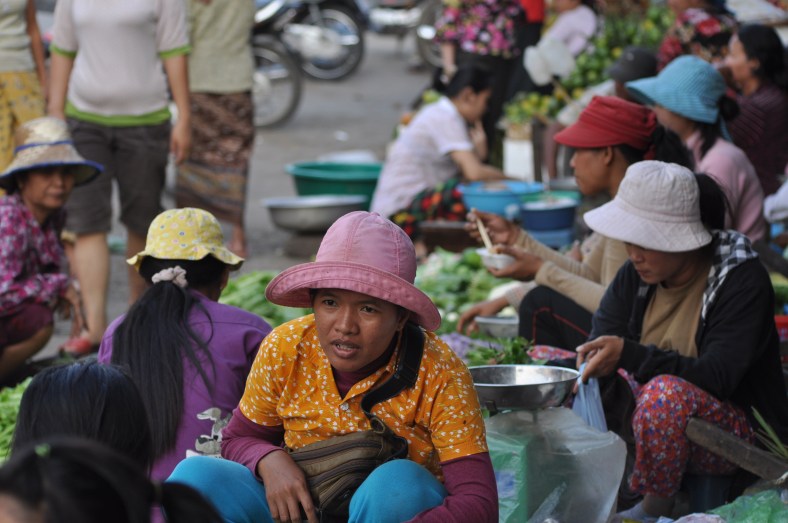
We started off our trip in the country’s capital Phnom Penh, a bustling city with an edge of serenity amid the busy markets, motorbikes and tuk tuks. After a few days in the capital we travelled to Banteay Meanchey. It is well worth exploring beyond the typical tourist cities in Cambodia to see the endless rice fields and compact wooden houses, often on stilts, that populate the countryside. Ornate, brightly coloured pagodas and Buddhist temples poke out amongst the greenery and monks in their burnt orange robes are a common sight.

Battambang was our next stop; a bustling town which, although a popular travel destination does not scream ‘tourist central’. Nearby Siem Reap has greater tourist credentials being much the same as any other tourist destination and very different to the rest of Cambodia.

Just outside Battambang in Angkor Wat, Cambodia’s pride and joy. Angkor Wat sits at the centre of a city of temples and ancient buildings called Angkor. Spend at least a day exploring the city’s ancient temples, each with their unique story.

On the way back to Phnom Penh we stopped for a night in the sleepy town of Kampong Cham on the banks of the Mekong River. The influence of the former French colonial rulers is obvious to see in the architecture here. It is also common to see boisterous aerobic classes, led by energetic dance music, taking place along the riverfront.

From Kampong Cham it is easy to stop off in Skuon, or ‘Spiderville’ as it is known. One of Cambodia’s delicacies is deep-fried tarantula ans as soon as you pull in for lunch here, children decorated with spiders, dead and alive, will offer you some to try.

It is important to understand some of the history of Cambodia and during your trip you should certainly pay a visit to a museum such as Choeung Ek Genocidal Centre just outside Phnom Penh, or the Tuol Sleng Genocide Museum in the city itself. Both give fascinating insights into Cambodia’s tumultuous history.

Today, Cambodia is a country rich in beauty, character and positivity. Many people with a high school education speak English and a simple conversation or glint in the eye will often demonstrate the mischievous Cambodian humour and generosity demonstrated by so many. Cambodia’s future is looking bright.

Where to Eat

Mith Samlanh is based in Phnom Penh and vocationally trains young people at risk from violence, poverty, drugs and trafficking. Many learn catering in one of their training restaurants. Don’t let the wo

rd training put you off though as the food and service is excellent. Romdeng Restaurant served more traditional Khmer food from the contemporary to ancient recipes.

What To Buy

You won’t be short of souvenirs in Cambodia’s markets and shops. The Russian Market in Phnom Penh is a great place to shop and there are also good markets in Battambang and Siem Reap. Of cour

se there are plenty of Buddha statues in various materials but to go for something truly traditional get a chequered scarf. Make sure you get your bartering hat on though and remember there’s nearly always money off for multi-buys.

Must See Or Do

Although it’s faster to travel by road from Battambang to Siem Reap, a boat ride is by far the most scenic way; passing through floating village life, narrow canals and then opening onto the Tonle Sap L

ake, a great expanse of water and greenery for as far as the eye can see. Try your luck at one of the little shops the boat will stop at selling traditional Khmer (Cambodian) food and various snacks. Including, as I spied at one shop, Cornish pasties!

Fights & Accommodation

The ideal time to go is between late November ad February when the weather is dry and not too hot. You can;t fly directly to Cambodia from Cardiff but you can fly to Bangkok and go from there. Alternatively,

go to London Heathrow where flights to Phnom Penh are £500-£700. The main cities have a range of accommodation to suit all budgets starting from $2 a night but there is less variety in more rural areas and you may have to use a hotel.

Thanks to Hannah Hendersonfor the great photos.

Dust From A Distant Sun: Cambodia’s Garment Workers

First appeared on Ctrl.Alt.Shift on 4 February 2011

Over 300 garment workers in Cambodia have lost their jobs after striking for a ‘living wage’ in the latest dispute between workers and bosses for better pay and conditions.

So why should you care? Well, next time you’re choosing your out-of-office / weekend attire, remember that certain high street brands such as Gap, Zara and H&M, get some of their clothes from many of the factories involved (according to Labour Behind The Label).

Before my own trip to Cambodia – alongside a reporting crew in December 2010 –  we had been briefed on the country: the cultural dos and don’ts, the weather, and what issues the country faced. One of the things that interested me particularly was that some freedom of speech was slowly being eroded in Cambodian society, and there were people who were becoming more reluctant to take part in strikes or protests.

While doing further research for the trip, a story about Cambodian garment workers clashing with police caught my eye . The workers had gone on strike after the suspension of a union official. I was curious after what we had been told so tried to find out more on my trip…

In Cambodia I had a chat with a local development worker Simorn, who works for DCA/CA’s Joint  Programme* (a partnership between Danish Church Aid and Christian Aid). Simorn said often the companies say no to things like higher wages because they have to pay out money for things like electricity, as Cambodia’s garment industry wasbadly hit by the recession.

Simorn also explained how some garment workers suffer abuse at the hands of management in the factories. Some union workers have tried to negotiate for better conditions but have had little success, and unrest among workers had been worsened by the assassination of one of the most popular and outspoken union leaders,Chea Vichea in 2004.

According to the president of the Cambodian Labour Federation, Ath Thom, the latest dispute over unfair dismissals involves 379 workers from 18 factories. But Ken Loo, the secretary general of Garment Manufacturers Association in Cambodia, said he thought these figures were inflated and that most of the suspended workers had been reinstated.

Ath Thom has appealed to the Prime Minister and sent a letter to the Ministry of Labour about the situation. According to Labour Behind The Label, the government has called on employers to reinstate workers, and the charity says the actions of employers are in contravention of the Cambodian Constitution and Labour Laws.

Now various NGOs and organisations, led by Clean Clothes, are calling for people to contact H&M, Gap and Zara to increase pressure on their suppliers and show their customers that they are committed to ‘freedom of association’ in Cambodia.

It’s your choice how you take action – but do acknowledge that our Cambodian brothers and sisters need our support; support that is warranted, as we, as the consumers of the products they make, play a part in this equation.

Building A Forum For Women In Bangladesh

First appeared on Ctrl.Alt.Shift on 31 January 2011

Discover how women in Bangladesh are learning more about their rights, their purpose and potential power in the home, government and society as a whole. Amy Hall reports…

Traditionally, women in Bangladesh are not encouraged to take part in public life and have less access to education; but increasingly Women’s Forums and savings schemes mean that groups of women have strong voices within their communities.

Christian Aid’s Gen Lomax recently visited Bangladesh and met women involved in groups that work with Christian Aid’s partner organisation CCDB. Perceptions of women’s equality have begun to change since these groups were set up and some Women’s Forums have received training in influencing politics. They have learnt about their rights, and are becoming increasingly demanding towards the local government ensuring that it is more accountable.

The women Gen spoke to found these groups valuable in increasing the voice of women within their community but also in gaining independence as individuals. Mononoma Kunda, 49, is a member of Bashundhara Forum and has been since 1985.

She has received training on rights and advocacy which she put to good use when a powerful neighbour occupied some of her land: “When I joined the forum, I raised my voice and we discussed this problem. We then took this to the local government and they measured the land, and now the man has left!”

Mononoma has not always had this independence though, “My husband did not want me to go to the forum because he wanted me to make meals and stay at home. Sometimes he was very angry. Now he always encourages me. He sees that now I am independent, I earn money and his opinion has changed…We have built faith, love, trust, and now we respect each other. Now I make joint decisions in my family. The forum is our pride.”

Another proud husband is Shakti Kirtoniya. His wife Monika Kirtoniya has received agricultural training via the Sonali Swapna Forum (Golden Dream Forum). “I feel happy that my wife is part of this forum.
Before she just worked at home. But now she has a business and works outside. She earns money which we can spend on our children, on our lives. Now she knows so many things, she has received so much training and is a skilled woman with experience.”

At 16 Nipa Mojumder is already part of the Sonali Swapna Forum. Nipa is not part of the forum, her mother is. Her parents are supportive of her activities and she says that their generation is beginning to change its perceptions. “It is not possible to develop our country if men and women don’t work together… My parent’s generation is very conservative, but now this is changing. They want women to work outside. Previously there were superstitions about everything, now this is changing.”

By organising together women all over the world are raising their voices and becoming active in public life. This empowerment has a positive affect on their families and people around them and seems to be the only way towards sustainable development.

Pakistan Floods: 6 Months On

First appeared on Ctrl.Alt.Shift on 27 January 2011

Amy Hall reports back on what is happening in Pakistan since the massive floods that hit the country six months ago and on what Christian Aid has been doing to help the people affected…

Six months ago Pakistan was hit with flooding which killed 2000 people and left a fifth of the country underwater.

Since then people have been trying to rebuild their communities in a recovery which has been predicted to takeyears. With food prices rising and mass unemployment, life has been hard for the 20 million people affected by the flooding.

Much of the world was slow to pick up on how much devastation the country was facing and some decided to focus on the negativity surrounding how the President was dealing with the situation. Instability caused by the flooding has also led to concerns about the already insecure situation in Pakistan. Despite the slow start however, Christian Aid’s Neill Garvie told us that NGO work in Pakistan has been well coordinated with effective communication mechanisms in place.

Christian Aid has been working with its partners in Pakistan as part of ACT Alliance, a group of 105 organisations working in humanitarian assistance and development worldwide. Christian Aid has raised £4.8million to help the victims of the flooding, and assifrom those funds has reached 15, 460 households so far.

Emily Reilly from Christian Aid visited Pakistan in the months following the floods. She spoke to women affected by the disaster who told her one of most useful things they had received were female specific hygiene kits and mobile medical units with female and male doctors. In the aftermath of the flooding, diseases associated with lack of hygiene became more prevalent as conditions were cramped and many people were living in makeshift shelters by the roadside. Women were suffering from hygine related diseases at a higher rate than men as, because of the conservative culture and lack of facilities, women could not find private spaces in which to wash and keep clean.
In the future, Christian Aid’s partners will keep up their efforts to provide food, shelter, water, sanitation and healthcare to people in the region, whilst also working on disaster risk reduction and helping people to have more secure livelihoods. If this strategy is continued, if Pakistan should face a similar disaster in the future, the devastation will be more manageable.

Christian Aid have also joined in partnership with Muslim Hands, an organisation working to help rebuild a village made up of Hindus, Christians and Muslims, a circumstance unusual in Pakistan. The country is 95% Muslim, and most of the other 5% are Hindus and Christians.

“We’re really excited about this partnership,” Neill Garvie told us. “The aim of this project is about making sure people have somewhere to live, but if another outcome is that people share and participate with each other more across faiths then that’s great.”

“I think situations like this demonstrate that although you can have conflicts between religions, at the end of the day these kinds of disasters affect everyone equally. Whatever background you come from it doesn’t matter and it can bring people together.”

It is hoped that development and disaster reduction projects like this will not only help Pakistan recover from the devastation the flooding has caused, but also help to foster unity amongst its people and lay the foundations for a more stable future.

Bangladesh, And The Aftermath Of Cyclone Aila

First appeared on Ctrl.Alt.Shift on 26 January 2011

Amy Hall finds out from Christian Aid’s Gen Lomax how the nation is getting on after the devastation of Cyclone Aila in May 2009, as well as what help has been provided by our partner organisation, Shushilan…
When Cyclone Aila hit coastal areas of Bangladesh in May 2009 it caused massive devastation. Nearly 300 people were killed and thousands of others displaced in one of Bangladesh’s worst cyclones in recent years.

It is now nearly two years on and the affects are still being felt, including in one of the worst hit areas, the Satkhira district. Many people have had livelihoods disrupted or destroyed but some positive links have been formed as families try and pick up the pieces.

Gen Lomax is a Communications and Development Officer for Christian Aid and has recently visited Bangladesh talking to people in the Satkhira district, one of the areas worst affected by the cyclone. During her trip she learnt about the work of Christian Aid partner organisation Shushilan.

The cyclone, combined with issues like lack of infrastructure and increasing climate change, has had a profound affect on communities. In Bangladesh about 830, 000 hectares of cultivable land has been damaged by saline (salt) water intrusion. This is a problem which has been worsened by the cyclone and is linked to climate change.
However, crabs can survive in this kind of environment so Shushilan has been training people in crab rearing as a more sustainable way of supporting themselves and their families.

Asha (a name meaning hope) is 28. She and her husband, Shonteshi (35), work side by side fattening crabs. As well as helping them provide for their family Asha said that this work has also brought them closer together:
“Before Aila my husband was involved in crab fattening, but now I am involved more too. I feed the crabs, catch them and then sell them in the market.”

Mofazzal Kagzi is 69, in Bangladesh the life expectancy for a man is 67 I am using the figure 66 based on (UNSD, 2008). He is a fisherman but when Cyclone Aila hit his village his pond was destroyed and all his fish escaped. He has been supported in rebuilding his pond replenishing his stocks with fish better adapted to the highly salinated water.

Mofazzal is forward thinking. When asked about the changes he has seen in his lifetime he said, “The positive changes I have seen are in relation to women. Before women never used to go out. Now they go out, they ride bicycles, and they are able to work outside of the home.”

On the more negative side, Mofazzal has also noticed changes to the climate: “Before we used to have six seasons”, he explains. “Everything was going well. But now there are changes. Too much rain, then drought, then heat.”

Climate change continues to be one of the greatest threats the world faces and is particularly putting poor communities in countries like Bangladesh at risk. Scientists have linked more intense cyclones in the Bay of Bengal with warmer seas linked to global temperature rises. Many people, like those Gen met in Bangladesh, depend on the environment to support themselves and it is these people on the front line that are already hit worst.

All’s Fair In Sport

First appeared on Ctrl.Alt.Shift on January 20 2011

Fairtrade London is upping the pressure on the 2012 Olympics organisers to make the event the fairest games yet…

As 2012 draws frighteningly closer the organisers of the Olympic Games in London are busy organising all the details of what is set to be an exciting event for world sport.

Aside from all the medal winning, security and transport concerns though the organisers need think about how they can make the games as ethical as possible and part of this is using Fairtrade products.Over the coming weeks catering contracts will be awarded for the 2012 Olympics and Fairtrade London want to remind the London Organising Committee of the Olympic Games and the sponsors (McDonalds, Cadburys and Coca-Cola) of their Fairtrade commitments and highlight the areas where caterers could do more.
There had previously been commitments made to make all tea, coffee, sugar, bananas and chocolate snacks at the games Fairtrade and Fairtrade London want to make sure there is no backtracking on these promises.

The last Olympic games were held in Beijing, China in 2008 and saw over 11, 000 athletes from over 200 national teams compete to be the best in the world at their sport. There were 43 records broken including the unforgettable sight of Jamaica’s Usain Bolt who looked like he was having a chilled out jog in the park as he went down through the finish line.

London is hoping to top Beijing’s event making the Olympics not only more exciting but also fairer and with more concern for the all the people that make it happen.
Take action by signing the open letter telling Olympic organisers and catering companies to “Source Fairtrade: make every Olympic catering purchase a winning one”.

More information at the Fairtrade London website.

Dust From A Distant Sun: Community Spirit And An Explosive Past

First appeared on Ctrl.Alt.Shift on December 20 2010

Boengsangke Village was abandoned until 1998 when 55 year old Voonthouk, the self described village ‘pioneer’, recreated a forward-thinking version of the village he had grown up in.

Accessible down a very rough road, the village is home to people implicated in all sides of Cambodia’s long and complicated conflict. With his one remaining eye full of pride, Voonthouk, a former government soldier, told us how he had gone in search of landless people dispersed around the countryside after the conflict, and taken them back to Boengsangke.

The village set-up is admired by surrounding villagers, who often ask for advice. Community Empowerment Facilitators from the organisation Life With Dignity (LWD) advise and inspire people into organising and helping fund projects such as the community pond. One third of the costs for the pond were raised by the villagers, and the water benefits more than 100 families.

The community spirit is represented by the large pagoda at the heart of the village, a simple open barn that is beautifully decorated with a sea of stunning homemade bunting and decorations. The villagers worship here, but also meet to make plans for the village, tackle any crises and relax. There are charts, maps and pictures on the wall; outside there are colourful flowers and a peaceful stream.

In many ways Boengsangke is a model village: decisions are made as a group through various committees, including a Women’s Committee and Youth Committee which raises awareness about HIV and marriage rights. The villagers told us that due to regular discussions, the levels of domestic violence, a problem prevalent in Cambodia, are now much lower than in other villages.

We were confronted with the hardships that face much of Cambodia’s, mainly agriculturally reliant population when we visited the household of an industrious widow, a lady admired throughout the village for her hard work and determination. It was clear that this was no easy existence: While she owned the land her small house was built on, she did not own any farmland which, in rural Cambodia, means that a family is unlikely to have a sustainable livelihood.

The widow was brought to tears when she talked about her fears for her children’s future as she gets older and is less able to do so much manual labour. Like many Cambodians, her son has migrated to Thailand to work as a construction worker, while her oldest two daughters help her out in the home. Her youngest daughter was lucky enough to be in school, but it was clear this woman had to do a lot to make this happen. It is currently harvest time and she works as a farm worker all day and through much of the evening. She supplements her income by collecting bamboo to sell from the forest, an activity that is incredibly dangerous in an area littered with land mines.

There are three to five million land mines still undiscovered in Cambodia. We met Sysarang, a 39 year old pig farmer who volunteers as a point of contact for the Cambodian Mine Action Centre. When people find mines in the area, Syssrang leads a specialised team to their location. Boengsangke is surrounded by beautiful open space, but the villagers can’t wonder freely without risk of a land mine exploding.

There is a lot we could learn from the village of Boengsangke in Britain: like the importance of community space, and how important it is to tackle issues of stigma and empowerment to make changes in our own communities.

Poverty, lack of education and access to healthcare mean that many villagers face an uncertain future, while land-mines trap the community in a constant state of fear. I was left with the realisation that any way of life is rarely perfect, but we always have something to learn from each other.

Photos thanks to Hannah Henderson

The Great Cotton Stitch Up

First appeared at Ctrl.Alt.Shift on December 6 2010

Money given to help EU and US cotton farmers is ruining the chances of the West African cotton industry and distorting the global cotton market, according to a report released last week by the Fairtrade Foundation called The Great Cotton Stitch Up.

The report focuses on four West African countries referred to as ‘the C-4’ (cotton four): Benin, Burkina Faso, Chad and Mali, which all rely on cotton more than any other country to make money from exports.

Although the EU only produces 2% of the world’s cotton, its farmers get subsidies of $2.51 per pound of cotton, which is more than the market price. The US and the EU have spent $31.45 billion over the past nine years, which has led to what Fairtrade calls a ‘dampening down’ of cotton prices and reduced demand for West African cotton.

According to Fairtrade the ‘stitch up’ is that, although cotton is the most used natural fibre in the world, countries where it is cheap to produce remain poor and dependent on aid. the reprt claims this is largely down to subsidies to farmers in richer countries. Cotton should be something that helps lift countries like Chad and Mali, where 40% of the population depend on the cotton industry, out of poverty. Fairtrade says this is more likely to happen if the C-4 are on a level playing field with the EU and the US.

In 2001, the Doha Development Round (DDR), negotiations which aimed to create global trade rules that would simulate growth in opportunity and wealth for developing countries, began. However, little has been achieved over the last decade.

Fairtrade admits that if subsidies were eliminated production would decline in countries like the US, but that it would rapidly expand in other countries like the C-4. This argument could lead to criticisms from the ‘we-look-after-our-own’ brigade: why shouldn’t the EU give an advantage to their own farmers? The answer to this would be that EU and US aid to developing countries could be reduced if Southern countries had more economic independence.

The report accuses the EU and US of taking the easy option: giving aid to countries instead of reforming the systems that keep people trapped in poverty. The document states that the original aims of the Doha Round have been ‘glossed over’. It’s well known that a fundamental power imbalance is one of the major issues in the fight against poverty, but Fairtrade hope that the C-4 coalition will strengthen the position of these countries in global negotiations, along with support from countries like India.

The Indian government came under criticism from the US after its government introduced the Minimum Support Price for its cotton farmers after thousands committed suicide over debt. This is, however, despite the fact that the average Indian government assistance is 15 times less than that given to US farmers.

Fairtrade and eliminating subsidies are not the solution to a fairer global system, but they are a good place to start. The power that certain countries have over others is not only unjust but also unsustainable. Radical and lasting changes need to be made to combat global inequality, but while we are pushing for these to happen, any step towards equality is a good thing.

Words: Amy Hall

Download the full report here.